Boundary Editorial
Editing - Indexing - Mapping - Research
Boundary Editorial
Editing - Indexing - Mapping - Research
Whether you're a researcher, publisher, or organization, Boundary Editorial delivers the accuracy, clarity, scholarly integrity your work demands
Editorial Services
-
Sometimes called developmental editing - focuses on the overall organization, logic, and coherence of a manuscript rather than sentence-level grammar, style, or mechanics. It is particularly valuable at the early stages of the writing process. I follow Editors Canada professional editorial standards for structural editing.
1. Assessment
The edit begins with a full read of the manuscript to assess how effectively it engages your target audience. Purpose and presentation must align — the goal is to ensure the manuscript clearly identifies and meets the needs of its audience in an appropriate, context-specific way.2. Organization and content
An outline of the manuscript is created to map its existing structure. Ideas must flow logically from one section to the next — gaps are filled, irrelevant sections removed, and headings or subheadings introduced where they strengthen the material. This stage also evaluates whether any content is repetitive, inaccurate, or lacking in focus, and whether material could be more effectively presented in another form — a table, diagram, infographic, list, or appendix. All potential visual elements are assessed for relevance and placement.3. Argument and framing
Structural editing identifies gaps in reasoning and evidence, flags conceptual inconsistencies, clarifies chapter and section purposes, and advises on the framing and reframing of arguments or narratives. The end result is a stronger, more focused, more readable, and more persuasive manuscript.Please note that edits are delivered as comments, outlines, and revision suggestions rather than direct rewrites.
Standards for Structural Editing — Editors Canada -
Copy editing occurs once the main bulk of writing is complete. It involves reading your manuscript line by line to correct grammar, spelling, punctuation, and usage errors, and to ensure your material is accurate, consistent, and complete. It attends to language and detail while preserving the author's voice and intellectual intent. I follow Editors Canada professional editorial standards for copy editing.
1. Correctness
Errors in grammar, punctuation, spelling, and usage are identified and corrected — including misplaced modifiers, comma splices, typographical errors, and commonly confused words.2. Accuracy
References to general information are verified for accuracy, including historical details, narrative timelines, calculations, and quotations. URLs are checked and visual information — labels, cross-references, illustrations, tables of contents, menus, and links — confirmed as correct.3. Consistency
I have experience with APA, MLA, and Chicago editorial styles. I ensure your manuscript is internally consistent with respect to abbreviations, numbers, spelling conventions, capitalization, italicisation, and URLs. I review the reference list, footnotes, and all visual elements to ensure they follow a consistent style. I will follow a provided style sheet or create one if none exists.4. Completeness
Missing elements are queried or supplied — captions, headings, web links, contact information. I flag where citations are needed and note any elements requiring copyright acknowledgement or permission to reproduce.Please note that edits are made directly in the manuscript using track changes and explanatory comments.
Standards for Copy Editing — Editors Canada -
Proofreading is the final stage of the editorial process and is distinct from the copy edit. It is for manuscripts that are complete and structurally sound but need a final polish before printing or publication. It does not involve rewriting, reorganizing, or making substantive changes to content. I follow Editors Canada professional editorial standards for proofreading.
1. Error correction
The document is reviewed line by line for any spelling, grammar, and punctuation errors that may have been missed at earlier stages. I flag typographical and formatting errors, font irregularities, widows and orphans, ill-fitting text, page breaks, and poorly formatted tables and figures. Cross-references, running heads, captions, links, metadata, heading styles, line length, and image resolution are all checked.2. Judgement
I flag matters that may affect later stages of production — page cross-references, placement of visual elements, or alterations that could change the final layout. Inconsistencies in spelling, punctuation, facts, visual elements, navigation elements, and metadata are queried and corrected. Author and third-party alterations are incorporated where necessary.3. Mark-up
I use Adobe PDF markup tools when working digitally. I can also work on paper using standard proofreading marks unless another system is preferred. -
An index is an organised, searchable guide to the topics, names, concepts, and places discussed in a document. Indexers create clear and consistent search headings and add cross-references (see, see also) to help readers navigate the material.
Professional back-of-the-book indexes are not derived from keyword searches or automatically generated lists. They are created by humans who read the manuscript, identify important concepts, and organise them in a way that reflects how readers actually think and search for information.
At Boundary Editorial, I use Cindex indexing software. I do not use AI — it misses entries, fails to provide an appropriate index structure, and hallucinates content.
For more on why you should choose a human indexer: LLM-Generated Book Indexes: Can They Replace Professionally Created Indexes?
-
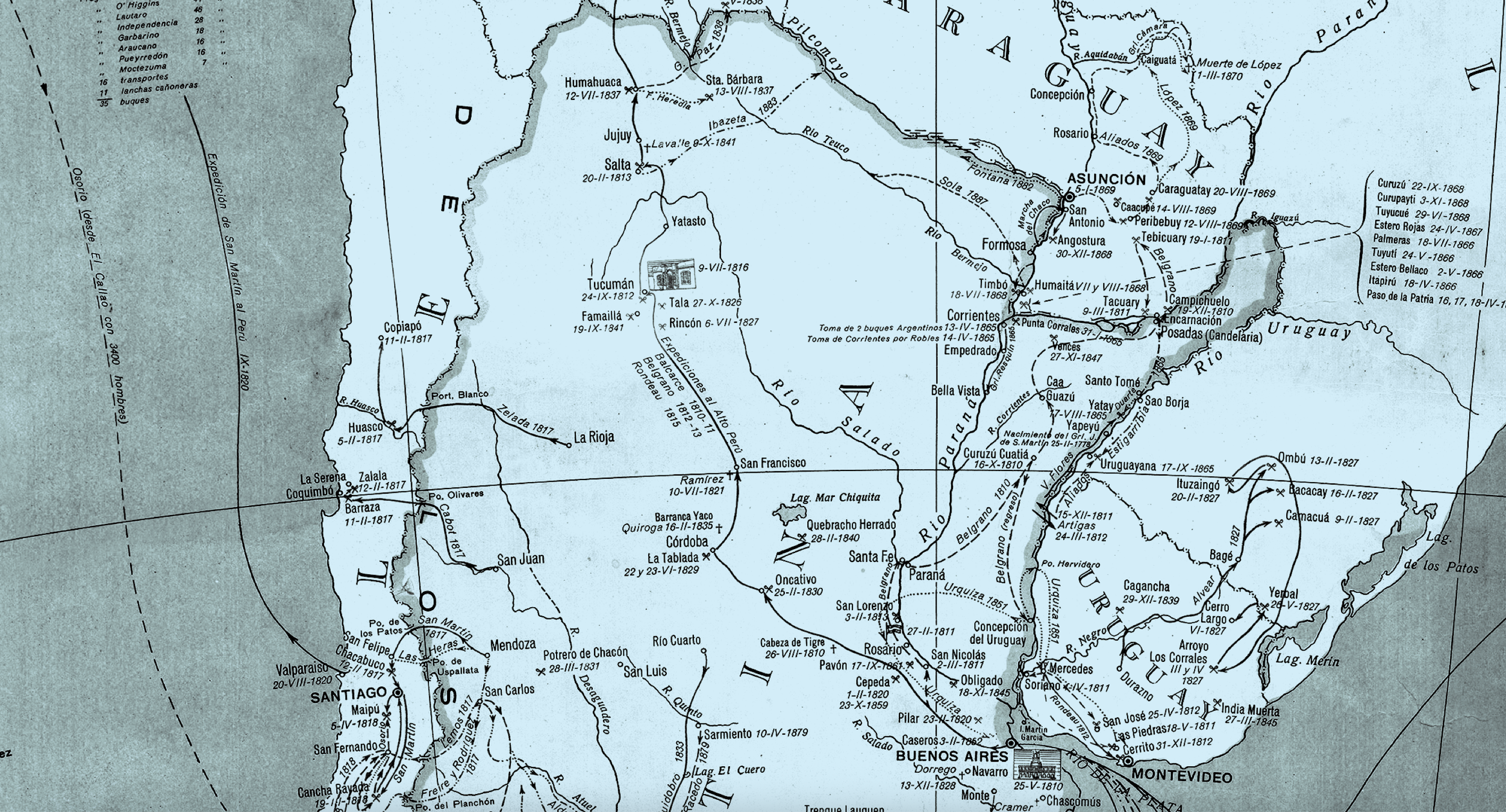
Boundary Editorial makes maps, helps you make your own, and edits maps you've already created.
As mapmakers
I use QGIS and ESRI products (ArcGIS Online and ArcGIS Pro) to produce both reference maps and maps for data visualisation. I also have experience with web mapping platforms including Google Maps API, Leaflet, and Mapbox.As map editors
I ensure your maps follow cartographic conventions — checking that content is up to date, place names are spelled correctly, labels are consistent, and that best practices are followed for the positioning of countries, cities, and bodies of water. I verify that colours are appropriate, the scale bar is in the correct units, and the legend is accurate. I also ensure the map title and content aligns with your written text and that it is correctly placed in your document.For analytical maps
I advise on appropriate projections and spatial frameworks, evaluate how your maps support or undermine your argument, and identify the assumptions embedded in your choice of map design.For more information: 33 Map Elements to Include in Cartographic Design and Cartographic Principles — Essentials of GIS, Chapter 9
-
Rigorous research is the foundation of strong scholarship. Boundary Editorial provides academic research support for scholars, editors, and publishers who need reliable, well-documented, and analytically informed research tailored to their projects.
My work supports research at every stage and is grounded in disciplinary standards, archival literacy, and careful source evaluation. Research assistance includes:
Literature reviews and bibliographic research
Source discovery — primary and secondary sources, archival materials, and datasets
Fact-checking and verification
Historical, legal, and geopolitical research
Background research for maps, indexes, and editorial projects
Citation checking and source validation
All research is fully documented and delivered in a format suitable for academic writing and publishing — as annotated bibliographies, research memos or briefs, chronologies and background dossiers, or source lists aligned with specific chapters or arguments.
Ph.D. Geography
-
McGill University
-
Editors Canada
-
Indexers Canada
-
Professional Editing Practices, SFU
-
Indexing, UC Berkeley
-
Applied GIS, Toronto Metropolitan University
-
Ph.D. Geography - McGill University - Editors Canada - Indexers Canada - Professional Editing Practices, SFU - Indexing, UC Berkeley - Applied GIS, Toronto Metropolitan University -
Michelle Katherine Braiden, Ph.D
+1 438-992-8771 - Canada
+54 011-5869-3151 - Argentina
michelle@boundaryeditorial.com
I founded Boundary Editorial on a simple belief: that rigorous scholarship deserves equally rigorous editorial support.
I hold a Ph.D. in Geography from McGill University, where my dissertation examined the International Court of Justice, international boundary disputes, and Indigenous territorial claims. I've also spent more than 20 years as a professor at CEGEP Dawson College in Montreal, teaching philosophy, political theory, and environmental ethics - which means I bring both deep subject knowledge and a teacher's instinct for clarity to every project.
My editorial training is formal and current: I hold certificates in Professional Editing Practices (Simon Fraser University), Indexing (Berkeley Extension), and Applied Digital Geography and GIS (Toronto Metropolitan University). I'm a member of Editors Canada and Indexers Canada.
When I'm not working, you'll find me between Montreal and Buenos Aires — I'm a tango dancer, and yes, that's relevant. Precision, timing, and listening carefully to your partner matters in both.